
Once you see it, it’s everywhere.
I often find myself saying, “Just because I don’t think your solution is right, it does not mean I don’t care about the problem.” If I’m lucky, I hear a response like, “Well, ok. Do you have ideas?” But often I just hear a reiteration how their solution fixes the problem.
In a software development setting, it might be a discussion about the aggressiveness of a schedule, a big rebuild, or tech debt — particularly when the one advocating is a willful senior leader.
Person 1: The existing system is old, busted and won’t scale. We’ve accumulated an unmanageable amount of technical debt. We need to rebuild it!
Person 2: I think rebuilding it would take much more effort than just patching it and let it be.
Person 1: But tech debt is a killer, and you’d just ignore that?
This is a motte-and-bailey argument, a term coined by philosopher Nicholas Shackel…
“A Motte and Bailey castle is a medieval system of defence in which a stone tower on a mound (the Motte) is surrounded by an area of land (the Bailey) which in turn is encompassed by some sort of a barrier such as a ditch. Being dark and dank, the Motte is not a habitation of choice. The only reason for its existence is the desirability of the Bailey, which the combination of the Motte and ditch makes relatively easy to retain despite attack by marauders. When only lightly pressed, the ditch makes small numbers of attackers easy to defeat as they struggle across it: when heavily pressed the ditch is not defensible and so neither is the Bailey. Rather one retreats to the insalubrious but defensible, perhaps impregnable, Motte. Eventually the marauders give up, when one is well placed to reoccupy desirable land.”

You see, during the discussion, the arguer conflates two different, but highly related, positions. One is controversial and difficult to defend. The other is strong or obvious and defensible. This is basically the opposite of another, perhaps more familiar fallacy — the straw man fallacy. While motte-and-bailey fallacies pivot weak positions to look stronger, straw man fallacies reframe strong positions to look weaker. Construct an easily defeated version of an argument, then defeat it.
You find this motte-and-bailey tactic in a lot discourse outside of the work environment. Identifying it in the workplace will help you deeply understand what’s happening in the conversation, and perhaps arrive at some deeper insights behind the position.
Are they retreating to the motte because they really can’t defend the bailey? Are they simply being performative for the benefit of others in the audience? Are they retreating because they need more time to collect their justification? Are they simply feeling attacked, possibly due to your perceived tone? Are they really asking for help, but aren’t sure they know how to do that?
Ways to counter
Ok. So they seem to be conflating arguments. How do you respond?
You could go ahead and attack the motte
I mean… good luck. You can choose to do this if their more defendable argument is still weak. In the context of software development, this may mean arguing that tech debt isn’t a problem or team culture doesn’t need addressing or that more customer feedback isn’t worth it. There are scenarios where those arguments might win the day, but it’ll need to be well supported with strong data-driven justification and pre-existing widely held support from the organization.
…and an understanding on your part that you are in for a fight with deeply held belief systems.
Active Listening
It’s often just the right approach. Restate their argument to acknowledge you are engaged, understand and even agree with the more defensible position. Ask them to “Say more?” See if that helps dig out some new deeper understanding.
Ask for precision and consistency
Return to the bailey by asking for details and crispness. This can uncover the gap in their argument, but also encourages a more thoughtful and useful discussion. It may also reveal the their original proposal is more solid than you had expected.
Ask if they are open to talk through alternatives and your ideas
Re-anchoring the conversation back on the main debate and reframe it as a low-stakes ideation session. Maybe those ideas will gain immediate support, or merely plant some seeds.
Step back to guiding principles
Acknowledge the point, but perhaps they are working with different requirements or incentives or goals. Moving the conversation to guiding principles creates some distance from actual dispute without going all the way to the motte. “Yeah, tech debt in that area is very bad. How are we picking our targets?” Perhaps, it gives the conversation a helpful re-anchoring before returning to the core discussion.
Ways to avoid it in the first place
There’s two sides to avoiding a motte-and-bailey fallacy. One, how do you avoid someone giving you the ol’ motte-and-bailey. Two, how do you avoid yourself retreating to the motte in conversations.
First, establish the right rapport and expectation with your team and peers. Let them know your general positions on a set of likely mottes. “Tech debt in these areas are very bad.” “I care about these aspects of team culture.” “We are here to serve our customers.” “I care deeply about the details of the technical approach, and the implications on the timeline and organizational impact matter a lot to me.”
Second, build rapport to help avoid the need for unhelpful defensiveness. Different leaders do this in different ways based on their leadership style. I personally tend toward authenticity, transparency and a willingness to acknowledge my own half-baked or just erroneous ideas.
I also believe simply mentioning this argument tactic helps everyone identify it when it happens, which allows people to choose their response… instead of stewing flummoxed and frustrated.
Here are some motte-and-bailey arguments I believe I’ve encountered
Just a warning, you might strongly disagree with the actual arguments expressed in these…


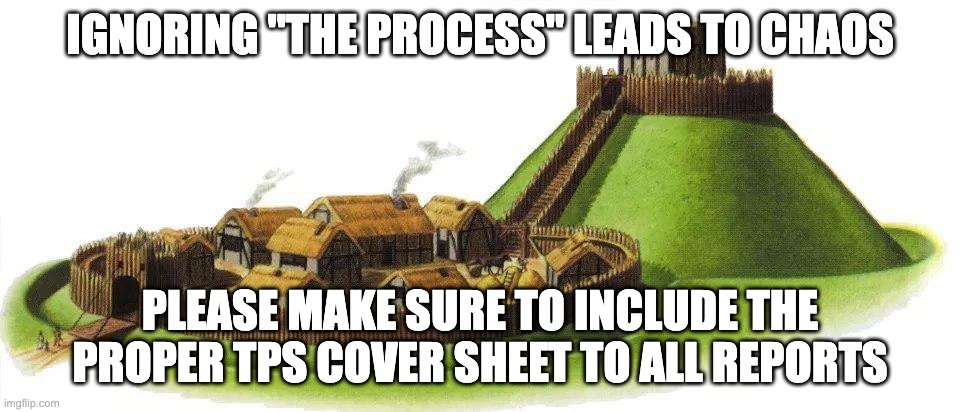
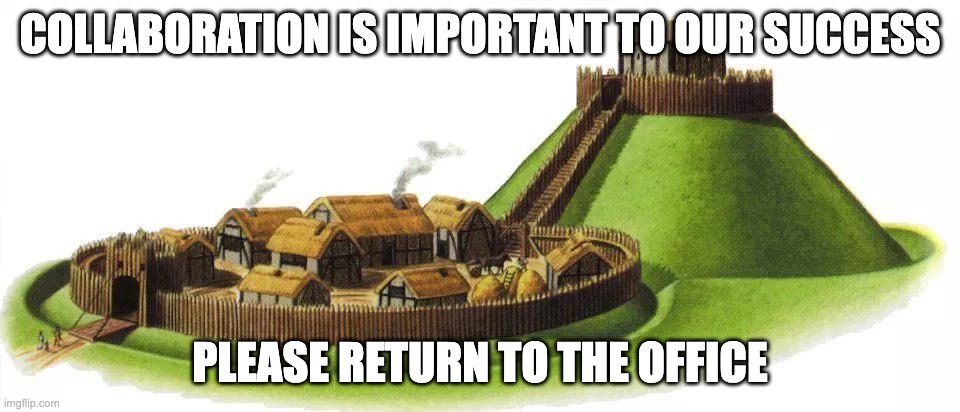
What ones have you seen?




 GregConklin.com
Leave a comment